
Unround Your Shoulders
Rounded shoulders aren't just tightness in front — they're weakness behind. Stretching the chest without strengthening the upper back is why posture 'fixes' never hold. Here's the version that does.
8 min read · Updated July 2026
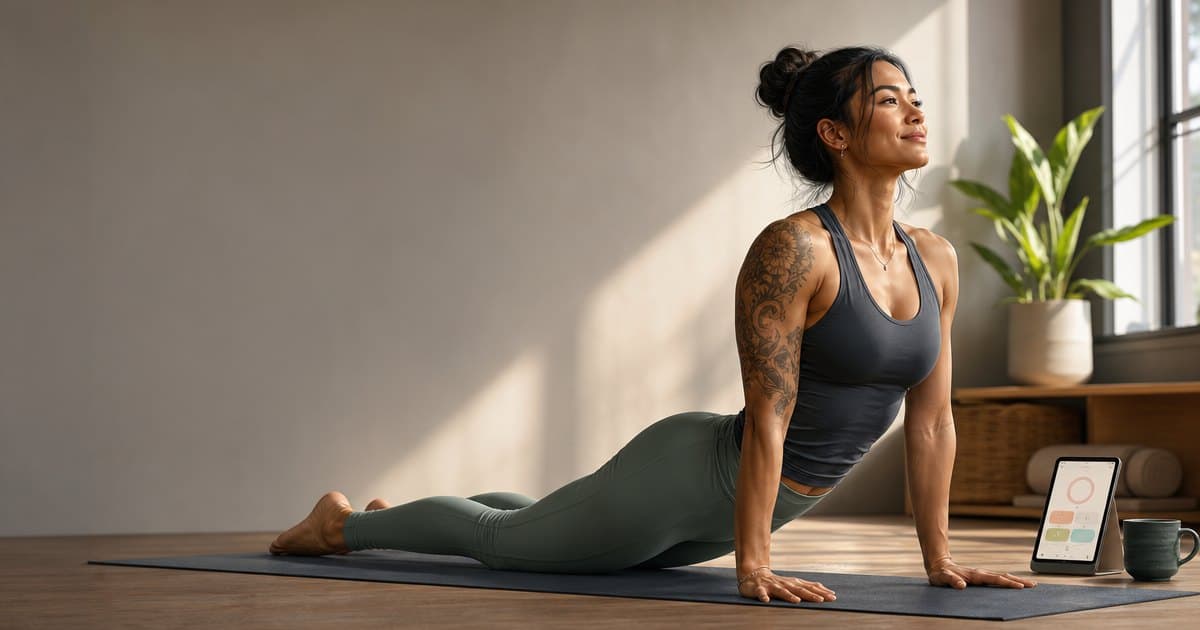
Why shoulders round in the first place
Rounded shoulders and a hunched upper back are usually described as tightness — and there is tightness, in front. But that's only half of it. A forward, rounded posture is a balance problem: tight, short tissue on the front of the body pulling you closed, and weak, lengthened muscles on the back that have stopped holding you open.
Two forces build it:
- Sitting and screens park you in a slumped, closed position for hours, and the body adapts to the shape you hold most.
- Press-dominant training — lots of bench, push-ups, and front-of-body work without matching upper-back volume — tends to tighten the chest and front delts and can leave the upper back under-worked.
Both leave you in the same place: a stiff thoracic spine that won't extend, a tight chest, and an upper back that's forgotten its job. Fixing it means addressing both sides — not just prying the front open.
Why stretching isn't enough
This is the piece almost every "posture routine" gets wrong. Stretch your chest and foam-roll your upper back and you'll stand taller — for a few minutes. Then the weak muscles that are supposed to hold that taller position give up, and you settle right back to rounded. You opened the front but never trained the back to keep you there.
The version that holds does both, in order:
- Release the tight front and stiff mid-back — puppy pose, thread the needle, and backbends restore the extension and rotation the thoracic spine has lost.
- Strengthen the muscles that retract and hold the shoulder blades — and this is the part that's usually missing. Prone holds like locust and a loaded dolphin build the upper-back strength that turns a good position from something you force into your default.
Mobility without strength is a range you can't keep. Adding the strengthening is the whole reason the change lasts.
The four-day rotation
RepDriver's free Spine & Shoulder Flow is a four-day rotation built on exactly that logic — release, strengthen, open, reset — so you're never just stretching. Rotate through the four days with rest as needed.
| Day | Focus | What it does |
|---|---|---|
| 1 · Upper Back Release | Thoracic mobility, decompression | Restore rotation and extension in a stiff mid-back |
| 2 · Shoulder Strength & Mobility | Loaded shoulder & upper-back work | Build the strength that holds the shoulders back — dolphin, cow-face arms |
| 3 · Backbend Flow | Extension, chest opening, back-line strength | Locust and backbends to open the front and fire the back |
| 4 · Posture Reset | Gentle re-integration | Tie it together and settle into the taller position |
Follow it in the app
Spine & Shoulder Flow — release, strengthen, open, reset
A four-day upper-back and shoulder rotation that strengthens as well as stretches, voice-guided with calm music. Try any day free — no signup.
Try any day free — no signupThe moves that matter
Notice the mix — openers and strengtheners. That pairing is the point. Tap any move for a step-by-step demo with voice guidance.
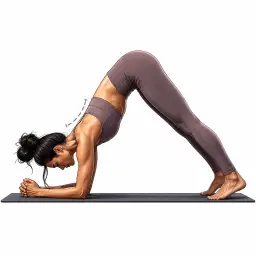
Dolphin Pose
Forearm down-dog — one of the best bodyweight builders of shoulder and upper-back strength through range.
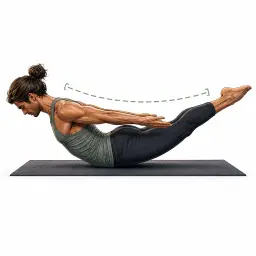
Locust Pose
Lift chest, arms, and legs and squeeze the shoulder blades — the no-equipment upper-back strengthener.
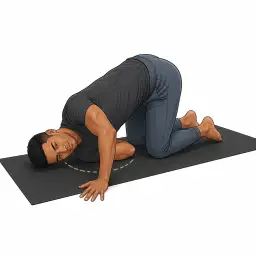
Thread the Needle
Rotates and releases the thoracic spine and rear shoulder — the mobility half of the fix.
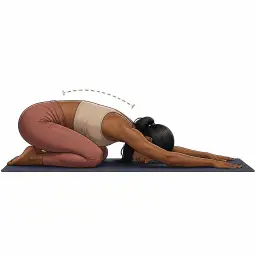
Puppy Pose
Melts the chest toward the floor to open the shoulders and front of the upper back.
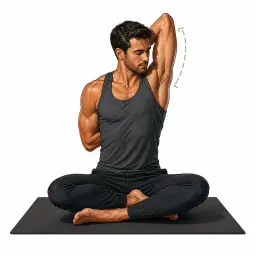
Cow Face Arms
Clasps behind the back to open tight shoulders and stretch through the triceps and chest.
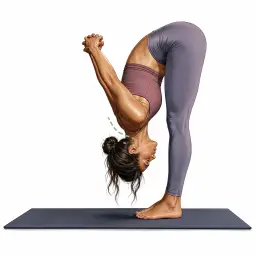
Standing Clasp Fold
Hands clasped behind, folding forward — a deep shoulder opener with a hamstring stretch thrown in.
Making it hold
The routine changes the balance; a few daily habits keep you from rebuilding the round the rest of the time:
- Raise your screen and sit back so you're not collapsing forward for hours — the posture you hold most becomes the one your body defaults to.
- Balance your pressing. If you train, match every push with pulling — rows and face-pulls build the same upper back the routine targets.
- Take extension breaks. A few times a day, stand, reach up, and gently arch back over a chair or your hands — the opposite of the shape you've been holding.
Common questions
- Can yoga fix rounded shoulders?
- It can meaningfully improve them when it does two things: opens the tight chest and front-of-shoulder tissue, and strengthens the upper back that's meant to hold the shoulders back. Most 'posture fixes' only stretch, which is why they fade. A routine that also builds the postural muscles — poses like locust and dolphin — changes the balance that holds your shoulders forward, and that's what makes the change stick.
- What's the difference between stretching and mobility for the upper back?
- Stretching lengthens tight tissue; mobility is usable range you can move and hold strongly. For the upper back the goal is mobility — you want the thoracic spine to actually extend and rotate under control, not just to be passively loosened. That's why the effective approach pairs openers (puppy pose, thread the needle) with active strengthening (locust) rather than stretching alone.
- How do I strengthen my upper back at home without weights?
- Bodyweight prone holds do it. Locust pose — lifting the chest, arms, and legs off the floor while squeezing the shoulder blades together — trains the exact muscles that hold your shoulders back, no equipment needed. Dolphin builds shoulder and upper-back strength through a supported hold. Both are in the routine below.
- Is dolphin pose good for the shoulders?
- Yes. Dolphin — a forearm version of downward dog — is one of the best bodyweight builders for shoulder and upper-back strength and mobility at once. Pressing the forearms down while drawing the shoulders away from the ears loads the shoulders through range, which builds the control that rounded, weak shoulders lack. Ease in; it's more demanding than it looks.
- How often should I do thoracic mobility work?
- Three to four times a week works well — frequent enough to change the tissue and reinforce the strength, without needing long sessions. Posture is a pattern held all day, so regular short exposure beats an occasional long one.
- Does yoga actually help posture?
- The kind that combines mobility and strength does. Posture isn't about constantly holding yourself upright by willpower — it's about having enough thoracic mobility to stack up and enough upper-back strength to stay there without effort. Train both and a taller, more open position becomes your default rather than something you have to remember.
Sources & further reading
The claims in this guide are backed by peer-reviewed research and public-health and professional bodies. Follow any link to read the primary source.
- 1.A combined stretch-and-strengthen program reduces rounded, protracted-shoulder posture — J. Manipulative & Physiological Therapeutics (2017), RCT
- 2.Yoga significantly decreased hyperkyphosis (rounded upper back) in a randomized trial — J. American Geriatrics Society (2009)
- 3.Therapeutic exercise measurably reduces forward-head and rounded posture — J. Manipulative & Physiological Therapeutics (2018), meta-analysis
Put it on your real calendar.
Create a free account to schedule the routine, follow along with voice guidance and music, and log every session — or just browse the library first.
Create a free account