
A Daily Yoga Flow for Beginners
You don't need an hour, a class, or any flexibility to start. A short daily flow — the same handful of poses, most days — is how mobility, calm, and body-awareness actually build.
7 min read · Updated July 2026
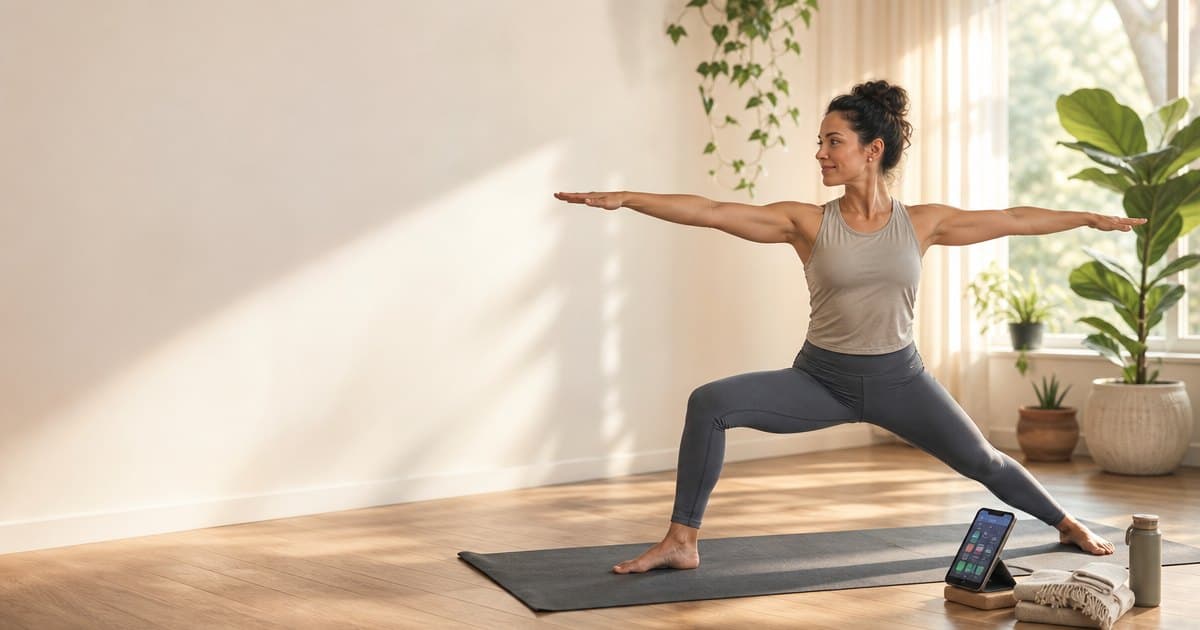
What a daily flow actually is
A daily yoga flow is exactly what it sounds like: a short, repeatable sequence of poses — the same handful of movements, most days — linked together with your breath. Not a 90-minute studio class, not a contortionist's highlight reel. Ten to twenty minutes of moving through familiar shapes, breathing slowly, and paying a little attention to your body.
That's the whole thing, and its ordinariness is the point. The value of yoga — better mobility, balance, sleep, and a calmer nervous system — comes from doing it regularly, not from any single heroic session. A daily flow is the delivery mechanism.
Why short-and-daily beats long-and-occasional
If you only remember one thing: frequency is the active ingredient. Reviews of stretching consistently find that more frequent practice tracks with bigger flexibility gains, and the major exercise guidelines put flexibility work at at least two to three days a week as a floor, not a ceiling. A daily flow clears that bar without you having to think about it.
There's also a quieter reason short wins: the flow you'll actually repeat is the one that's short enough to be frictionless. Fifteen easy minutes you do every morning will out-produce the ambitious hour you manage twice and then dread. Set the bar low enough to clear on a bad day, and let consistency do the compounding.
How long to hold each pose
For a general daily flow, about 30 seconds to a minute per pose is the sweet spot — long enough to settle in and take a few slow breaths, and right around the point where a static hold delivers most of its range-of-motion benefit. Holding longer isn't wrong, but it isn't required to make progress, and chasing marathon holds is a common way to make the practice feel like a chore.
It also helps to know what's actually changing. Much of what we call “getting more flexible” is your body learning to tolerate a stretch, not the muscle physically lengthening — which is why the gains feel gradual and why easing to a comfortable edge (not a painful one) is the right dose.
| Beat | What it does | Rough hold |
|---|---|---|
| Centering breath | Downshift the nervous system, arrive on the mat | 30–60s |
| Standing poses | Warm the hips and legs; build balance | ~30–45s each |
| Ground poses | Open hips and spine; the deeper stretches | ~45–60s each |
| Final rest (savasana) | Let it all settle — don't skip it | A few minutes |
The follow-along flow
RepDriver's free Daily Yoga Flow is built exactly to this shape: a calm, beginner-friendly sequence that paces every pose and hold for you, with voice guidance over quiet music and a background you can actually relax into. You don't count seconds or wonder what comes next — you just breathe and follow, and it ends in a proper rest.
Follow it in the app
Daily Yoga Flow — a gentle everyday practice
A short, voice-guided beginner flow that paces each pose for you and ends calm. Do it most mornings or evenings. Try it free, no signup.
Try the daily flow freeA few of the poses you'll move through:
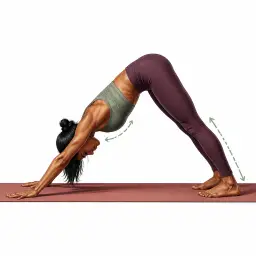
Downward-Facing Dog
The flow's home base — lengthens the whole back line; bend the knees freely.
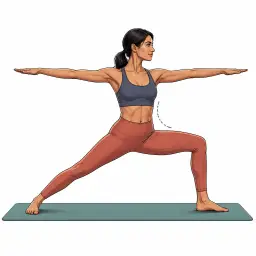
Warrior II
A strong, grounded stance that opens the hips and builds standing balance.
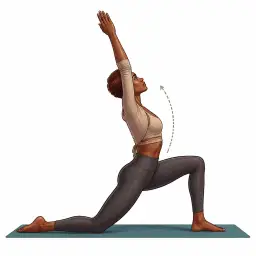
Low Lunge
Opens the front of the hip — where a day of sitting quietly tightens.
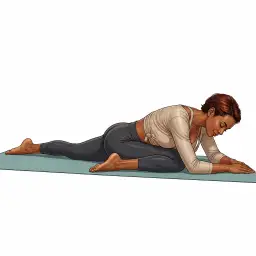
Pigeon Pose
The deep hip opener; ease in and let the breath do the work.
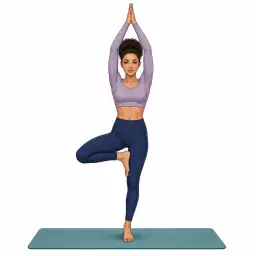
Tree Pose
One-legged balance — a hand on a wall is completely fine to start.
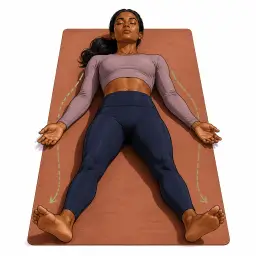
Corpse Pose (Savasana)
The rest that closes the flow. Do not skip it — it's where it lands.
Beginner mistakes to skip
- Starting too long. An hour on day one is how a daily habit dies on day three. Start at ten or fifteen minutes and let it grow on its own.
- Forcing the stretch. Yoga edges are comfortable, not painful. You're teaching your body to trust a position, and pain teaches it the opposite. Back off to where you can breathe.
- Holding your breath. The breath is the practice. If you're gritting your teeth and holding it, the pose is too deep — soften until the breath flows again.
- Skipping the final rest. Savasana feels like doing nothing, so beginners cut it. It's where the nervous system actually downshifts — give it the couple of minutes.
- Quitting because you missed a day. A daily flow is a practice, not a streak to protect. Miss a day, do the next one. Consistency over weeks is what matters, not perfection.
Common questions
- How long should a daily yoga flow be?
- Short enough that you'll actually do it every day — for most beginners that's 10 to 20 minutes. The benefit of a daily practice comes from the frequency, not the duration of any single session, so a consistent 15 minutes beats an ambitious hour you do twice and abandon. Start shorter than feels impressive and let the habit, not the clock, be the goal.
- Do I need to be flexible to start yoga?
- No — that's backwards. You do yoga to become flexible, not the other way around. Every pose has a beginner version (bend the knees, drop to a lower stance, rest a hand on a chair), and a lot of what feels like tightness at first is just your nervous system being cautious — it eases as the movement becomes familiar. If you can breathe and move slowly, you can start today.
- How long do you hold each yoga pose?
- For a general daily flow, roughly 30 seconds to a minute per pose is plenty — long enough to settle in and breathe, and about the point where a static hold delivers most of its range-of-motion benefit. Longer holds aren't wrong, but they aren't required to make progress. A guided flow that paces the holds for you removes the guesswork.
- Is it okay to do yoga every day?
- Yes. Unlike heavy lifting, a gentle yoga flow doesn't create the kind of fatigue that needs a recovery day — daily practice is not only safe for most people, it's where the benefits compound. The one caveat is intensity: a hard, sweaty power-yoga session is more like a workout and deserves the occasional easier day, but a calm mobility-focused flow can genuinely be a daily habit.
- What's the best time of day to do a yoga flow?
- Whenever you'll do it consistently. A morning flow wakes the body up and sets a calm tone; an evening flow unwinds tension and can help you settle toward sleep. There's no wrong answer — the best time is the one that survives contact with your actual schedule. Anchoring it to something you already do every day (coffee, brushing teeth, winding down) makes it stick.
- Can yoga replace strength training?
- Not entirely — they do different jobs. Yoga builds mobility, balance, body-awareness, and calm, and some poses build real strength, but it won't drive muscle growth the way progressive resistance training does. The two pair beautifully: lift for strength and size, flow for the mobility and recovery that keep you lifting. Many people run a daily flow alongside a dumbbell program for exactly that reason.
Sources & further reading
The claims in this guide are backed by peer-reviewed research and public-health and professional bodies. Follow any link to read the primary source.
- 1.Yoga's evidence base for stress, sleep, balance, and back and neck pain — NIH National Center for Complementary and Integrative Health
- 2.Static holds produce real range-of-motion gains, and a 30-second hold works as well as longer — Bandy & Irion, Physical Therapy (1997)
- 3.Flexibility gains are largely increased stretch tolerance, not permanently longer muscle — Weppler & Magnusson, Physical Therapy (2010)
- 4.More frequent stretching is associated with greater flexibility gains — Thomas et al., Int. J. of Sports Medicine (2018), review
- 5.Flexibility/neuromotor work is recommended at least 2–3 days a week — Garber et al., ACSM Position Stand (2011)
Put it on your real calendar.
Create a free account to schedule the routine, follow along with voice guidance and music, and log every session — or just browse the library first.
Create a free account